
How Office Workers Can Prevent Back Pain
January 13, 2022
Increase Performance with Massage Therapy and Active Release Technique
January 26, 2022
A herniated disc is a painful and scary condition. The herniation can be caused by an injury, overuse of the back muscles, or as part of the aging process. It can lead to some serious consequences like muscle spasms and pain that radiates down the leg. If you have suffered from this condition before, then you know how difficult it can be to recover from it without help.
What is a Herniated Disc?
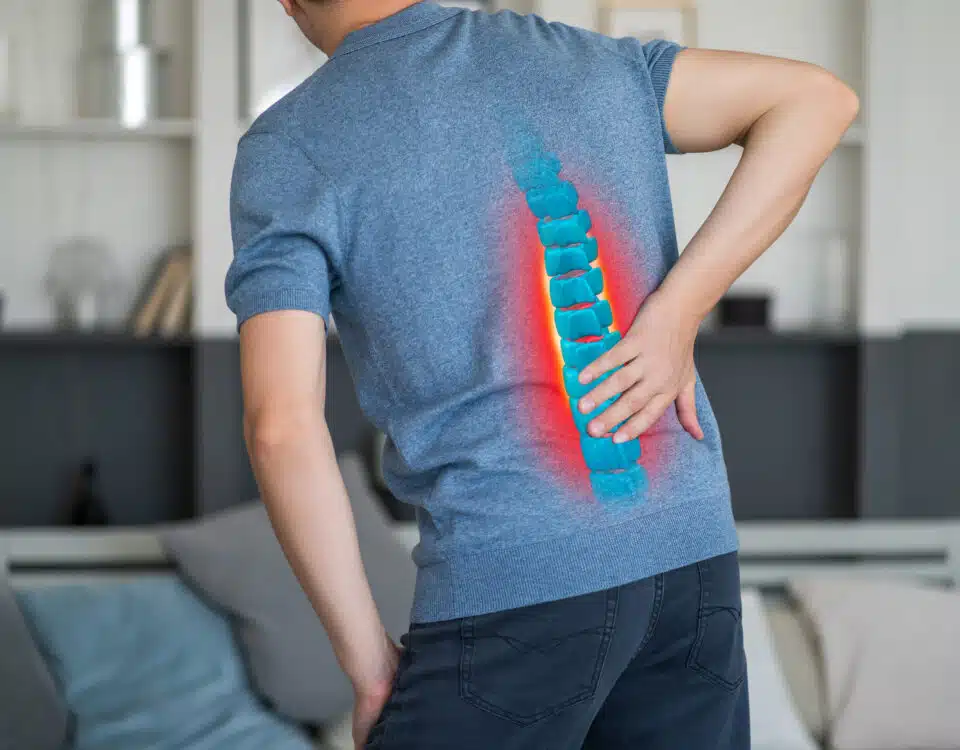
A herniated disc is a condition where the soft material in between the vertebrae bulges, causing pressure on the surrounding nerves. It can lead to a wide range of symptoms, but typically it causes pain down one leg.
How do you Get a Herniated Disc?
Typically this problem occurs as a result of an injury or when someone is born with weak spinal discs. Overuse of the back muscles, such as when you lift heavy weights incorrectly, can also cause this to happen. However, it often happens because the soft material in the center of the disc begins to break down over time due to deterioration.
Other Causes
Disks have soft, gel-like centers and a firmer outer layer, like a jelly doughnut. With time, the outer layer weakens and can crack. A herniated disk happens when the inner “jelly” substance pushes through the crack. The leaked material may press on nearby spinal nerves.
Several factors can contribute to a disk rupture, including:
- Aging
- Excessive weight
- Repetitive motions
- Sudden strain from improper lifting or twisting
Further Risk of Development
While some people are born with disc deformities and herniation, others have trouble pinning down the exact reason they’re experiencing it. Nearly any form of damage to the spine could rupture or tear a spinal disc. However, a few of the most common risk factors include:
- Sudden trauma to the spine, such as a car accident
- Overwhelming strain due to heavy lifting
- A simple sneeze that puts unexpected force on the spine
- Repetitive activities and actions that involve the back or neck
- Wear and tear that comes with age
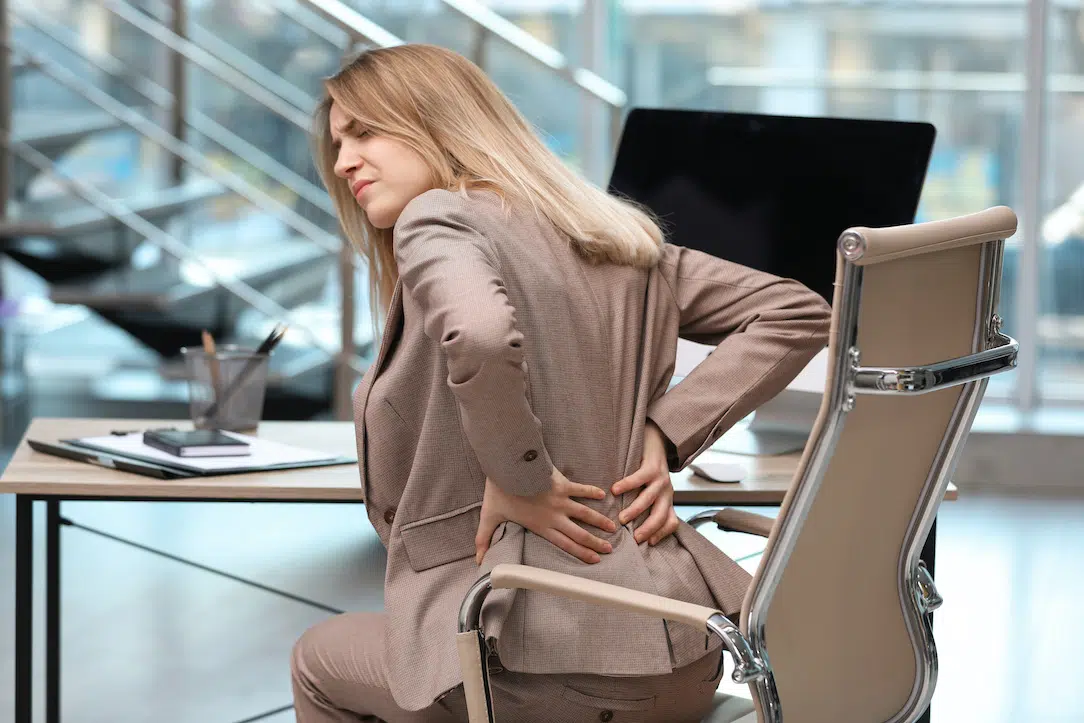
- Sitting for too long with poor posture
- Growing older, due to the natural degeneration of the discs
- Jobs that involve sitting for long periods of time or heavy lifting
- Staying sedentary and allowing your back muscles to lose strength
- Gaining excess weight, which strains the spine further
- Being male
- Smoking cigarettes
- Eating a poor diet that doesn’t provide the nutrients required for joint and disc health
What are Some Symptoms?
It is possible to have a major herniated disc and never experience a single symptom. If the disc is located away from nerve roots and has no contact with muscles or tendons, you could go through life without noticing it. However, it can also lead to some of the most severe neck and back pain we treat here at Texas Spine and Sports Therapy Center in Austin. Most patients with bulging discs experience:
- Sharp and spreading pain in one particular part of the back or neck
- Irritation in the rib cage, thighs, arms, or shoulders
- Numbness through extremities affected by the disc
- Muscle weakness
- Reduced reflexes
Treatment Options
The treatment goals for a herniated disc are to reduce pain and swelling and to minimize the chance of it happening again. Right here in Austin, we offer the following, non-invasive treatments for herniated discs:
- Spinal Decompression Therapy and chiropractic spinal manipulation to release pressure on the affected disc or discs
- Class IV DIOWAVE Laser Therapy
- Injections of cortisone to provide long term pain relief without dangerous medications
- Massage to relieve swelling or tension
- Tracking of bulging discs that aren’t causing symptoms
- Medically supervised weight loss to relieve strain on the entire spine
What Happens Without Treatment
If you’re showing signs of experiencing this type of pain, it’s important to come talk to Dr. Shaner and our team at Texas Spine and Sports Therapy Center. If left untreated, you can face serious health consequences.
An untreated, severe slipped disc can lead to permanent nerve damage. In very rare cases, a slipped disc can cut off nerve impulses to some nerves in your lower back and legs. If this occurs, you could lose control over your bowel or bladder.
Another long-term complication is known as saddle anesthesia. In this case, the slipped disc compresses nerves and causes you to lose sensation in your inner thighs, the back of your legs, and around your rectum.
Make an Appointment with Texas Spine and Sports Therapy Center
To learn more about herniated discs or to get started with treatment, contact our office today at (512) 806-0015. We look forward to helping you in any way we can and getting you out of pain and back to living your life.