

Children and Scoliosis
June 23, 2021
What to Do if You Experience Numbness and Tingling
July 7, 2021
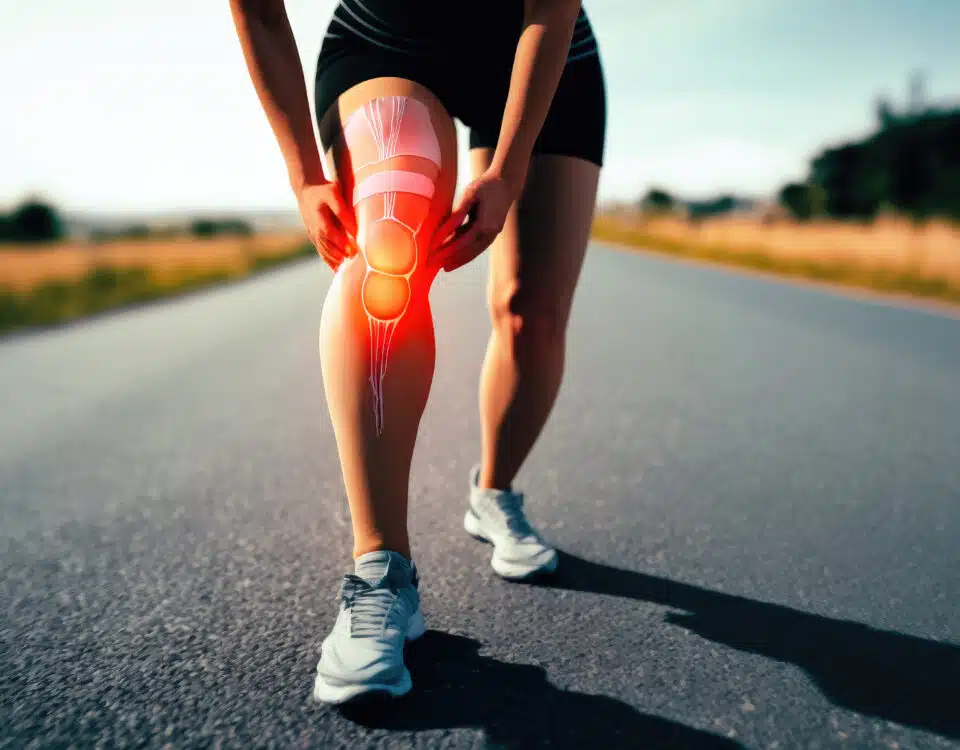
Runners know that this form of exercise is a thrilling way to stay fit and prevent diseases that can be brought on by not exercising and excessive weight gain. Unfortunately, it is hard to keep up with a running routine when a runner’s knee comes along. Athletes who run should work to prevent the syndrome from developing in the first place. Runner’s knee, also known as iliotibial band syndrome, can cause pain that could get so severe it could stop your running routine forever. Read on to learn about the symptoms and what Texas Spine and Sports Therapy Center can do to help.
Understanding the Knee
The three major joints of the legs are anchored with a wide strip of ligament that runs down the outside of each limb, known as the iliotibial band. The ligament attaches to the hip, knee, and the side of the shin down to the ankle. Without this band, the force of each step would cause the joints to push outward. Since the iliotibial band is needed for stabilization, it can easily be irritated by injuries and poor running habits.
What is Runner’s Knee?
Even though it’s known as runner’s knee, it doesn’t only affect runners. It’s an umbrella term that is used to describe the pain you feel if you have one of several different knee problems. WebMD explains that it can be caused by:
- Overuse. Bending your knee again and again or doing a lot of high-stress exercises, like lunges and plyometrics can irritate tissues in and around your kneecap.
- A direct hit to the knee, like falling down.
- Your bones aren’t lined up. If you have misalignment, the bones from your hips to your ankles can be knocked out of their correct position, including the kneecap. This can put too much pressure on certain spots. To that end, your kneecap won’t move smoothly through its groove and you can experience knee pain.
- Problems with your feet. Hypermobile feet, which is when the joints in and around the feet move more than they should, flat feet, and more can change the way you walk and result in knee pain.
- Weak or unbalanced thigh muscles. The quadriceps, the big muscles in the front of your thigh, are what help keep your kneecap in place when you bend or stretch the joint. If they are weak or tight, your kneecap may not stay in the right spot.
- Chondromalacia patella. These conditions where the cartilage under your kneecap breaks down.
Iliotibial Band Syndrome
The signs and symptoms that you have runner’s knee, or iliotibial band syndrome, can include:
- Pain and burning on the outside of either knee.
- Irritation and inflammation that appears just a few minutes after you begin an activity.
- Symptoms that fade with rest but return when active.
- Minor to no swelling.
- Diffused sensations that begin as sharp or stabbing pains
- Inflammation on the outer sides of the hip.
Risks of Runner’s Knee
As a runner, the way you train and the choices you make can all affect your risk of experiencing knee pain. Up to 15% of runners will experience this condition during their running careers. The more you learn about the condition, the more you can do to prevent it from occurring to you. The following things put you more at risk for developing knee pain that could sideline you:
- Challenging runs down hills or at an angle, which puts even more pressure on the band.
- Worn or incorrectly fitted shoes.
- Poor running technique that twists the leg as it strikes the grounds.
- Excessive exercise without plenty of time to rest between sessions.
- Insufficient stretching and warmup time.
- Running on concrete without extra supportive shoes.
Knee Pain Treatment Options
Runner’s knee doesn’t have to keep you from running for months on end, just as long as you seek help when you first begin to experience symptoms. If you begin feeling pain in your knee, stop running and come see us. We offer the following treatments that could help you with your pain:
- MRI scans to determine if the tendons are swollen or enlarged.
- Instruction on exercise adjustments that eliminate the irritation.
- Gentle stretching to help you eliminate tension in the hip or knee.
- Massage and pain management for short term injuries.
Make an Appointment with Texas Spine and Sports Therapy Center
Visiting our conveniently located office in Austin, Texas is the quickest way to determine if your knee pain is due to runner’s knee or another cause. Dr. Shaner and our team are ready to help you. Make an appointment with us today by calling (512)-806-0015.