

What it Means if Your Joints Always Pop
July 9, 2020
Can’t Sit Still? Learning About Restless Leg Syndrome
July 22, 2020
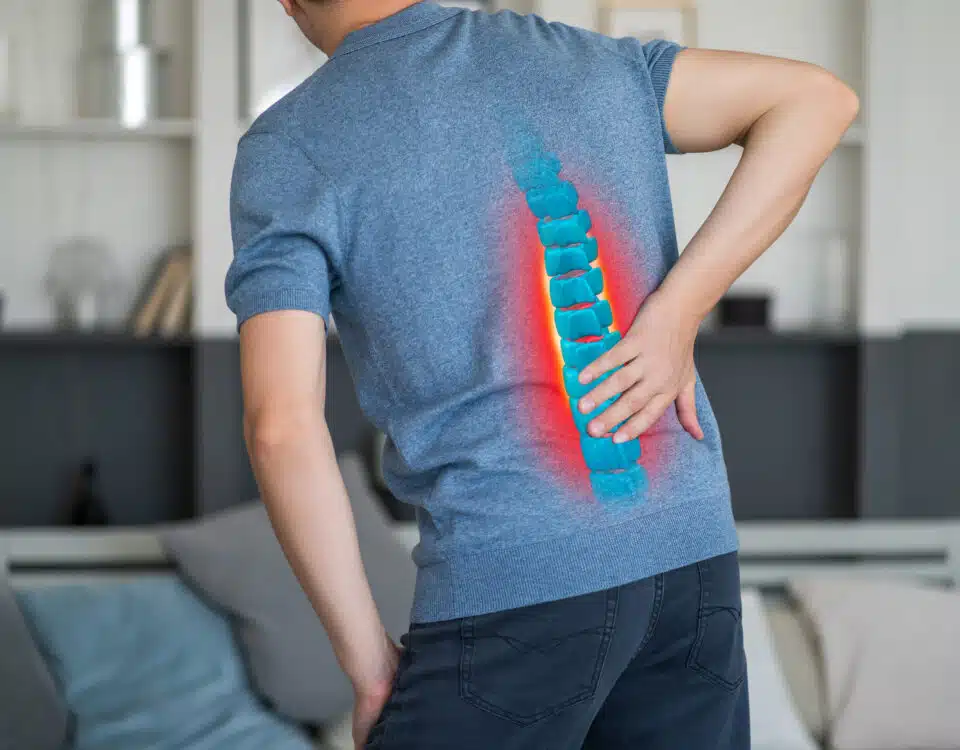
Most Americans will suffer from back pain at one point or another. Back pain can often be caused by herniated discs in many people. Furthermore, a herniated disc can even be associated with sciatica pain. Keep reading to learn how these two are connected and how you can beat the pain.
What is a Herniated Disc?
When your spinal bone moves a little too far, especially after an accident or injury, the outer material of your disc and the surrounding ligaments can be stretched. When these ligaments are stretched, it is known as a sprain.
After a sprain, when you move, your spine doesn’t move as smoothly as it should. The strain of normal movements causes further stretching of the disc and ligaments. When this happens, inflammation and pain occurs. This is similar to the front end of your car. For example, when it’s out of alignment, your wheels will wear unevenly and more quickly than they should. On humans, this is called degenerative joint disease or arthritis. The more time that passes, the more damage that is done. Eventually, the outer layers of the disc begin to wear and tear. When this process starts, the soft jelly-like substance inside can start to leak out. This is called a bulging or herniated disc.
A herniated disc can cause many health problems. Depending on where it’s leaking, it can pinch a nerve or the spinal cord. Due to this, a person with a herniated disc can have severe pain or numbness to where those nerves go. The nerves in the low back run down your legs, which is why herniated lumbar (low back) discs often cause symptoms in your legs. The nerve affected here, is also known as the sciatic nerve.
What is Sciatica?
Sciatica is inflammation or injury of the sciatic nerve located in the lower back. This doesn’t mean that all lower back pain is sciatica, though. Sciatica symptoms include:
- Leg pain that’s worse when sitting down
- Losing pain in the rear or hips
- Restricted movement and flexibility
- Stabbing sensations that make standing difficult
- Irritation that extends from hip to the foot
- Weakness in the legs
- Symptoms on one side of the body
Sciatica is one of the most common types of pain. Up to 40% of people will suffer from sciatic nerve pain during their lifetime, especially as they age. A herniated disc can put pressure on nerves, even the sciatic nerve.
Herniated Disc Pain
A herniated disc happens when a bulging spinal disc puts pressure on nearby nerves. If you have a herniated disc, Mayo Clinic notes your symptoms could include:
- Arm or leg pain – if your herniated disc is in your lower back, this is where you’ll feel the sciatic nerve pain. This pain is felt within your buttocks, thigh, and calf. Pain can also present in the foot too. Herniated discs in the neck can cause shoulder or arm pain that can shoot down the arm or leg when you move a certain way, sneeze, or cough. The pain is usually described as being sharp or burning.
- Numbness or tingling – people who have a herniated disc report feeling numbness or tingling throughout the body part affected by the injured nerves.
- Weakness: muscles near the affected nerves can weaken with herniated discs. This can cause stumbling or inability to lift or hold items.
Herniated Disc Treatment Options
There are a number of treatments for herniated discs that are powerful, yet non-invasive, and drug-free. At Texas Spine and Sports Therapy, these treatment options are:
- Spinal decompression therapy to release pressure on affected disc
- Chiropractic spinal manipulation
- Class IV DIOWAVE laser therapy
- Cortisone injections for long-term pain relief
- Massage to relieve swelling or tension
- Tracking or bulging discs that aren’t yet causing symptoms
- Medically supervised weight loss to relieve strain on the spine
These treatments are often far better than surgery. Surgery can attempt to relieve the pain, but results are not always what you would expect. Many times, patients feel no pain relief through surgery. Trying non-surgical treatments first is always the best option.
Come in for an Appointment
When you come in for your appointment, Dr. Shaner or a member of our team will spend time learning more about you and your current health concerns. We will use this information to evaluate your condition and determine a treatment plan. Treatment options can include the ones listed above, or others that we feel will best relieve you of pain from your symptoms. If you’re ready to heal from a herniated disc, call us today to make an appointment: (512)-806-0015.