

What are the Different Types of Neuropathy?
October 14, 2020
At-Home Remedies for Sciatica Pain
October 29, 2020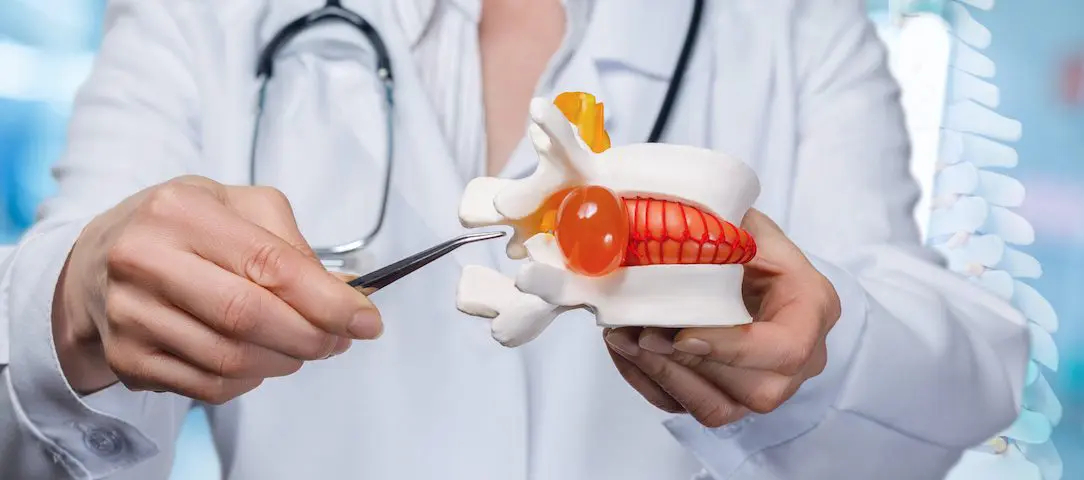
A herniated disc, also known as a bulging disc, is often known as the beginning stages of degeneration. They can occur in any part of the spine, however, they’re most common in the lumbar region (lower back) and in the cervical region (neck). If you have a herniated disc, here’s how the Texas Spine and Sports Therapy team can help you.
Back Pain
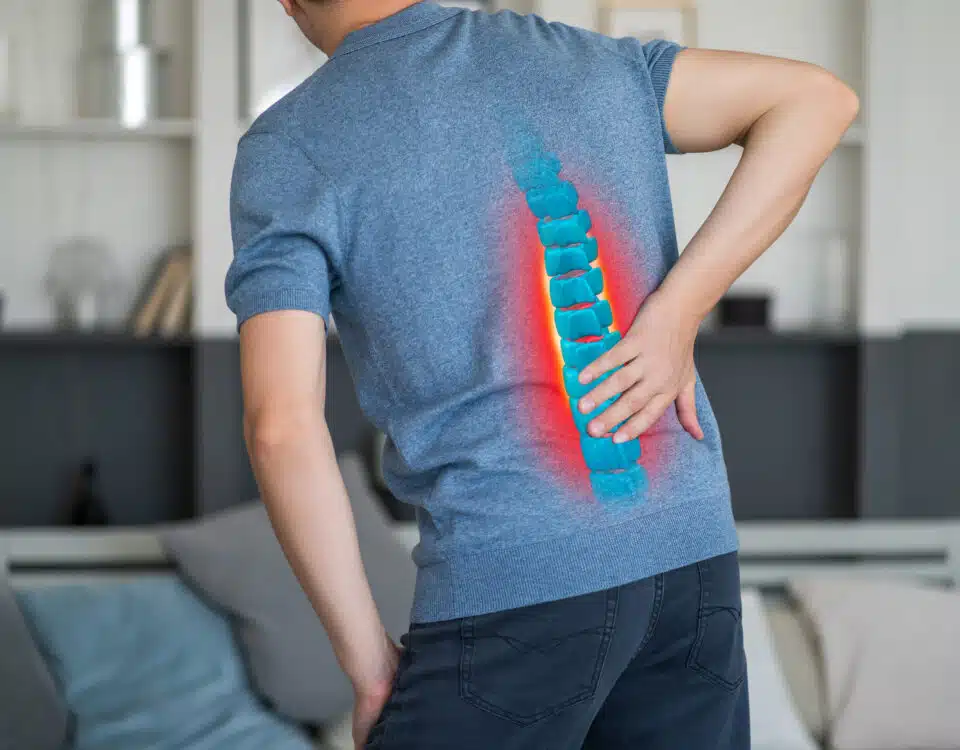
Most back pain is mechanical in nature. This means, in most cases it happens by your spine not moving and working properly. Back pain can also be caused from diseases and tumors, but this is the minority of cases. Your spine is made up of a 24 individual bones that stack up on each other like blocks. Between every two bones is a vertebral disc. These discs are like a jelly doughnut. They are soft and jelly-like on the inside, protected by a tough exterior. These discs help to “glue” your spinal bones together and also serve as shock absorbers for your spine. Because of the way your spine is designed, your spinal bones can move freely – allowing you to bend forward, backward, side-to-side and twist.
Understanding Herniated Discs
To get technical, the American Association of Neurological Surgeons briefly explain how the spine and how herniated discs occur. In the spine, the disc is a cushion to the bone. These discs are like pillows with a tough outer layer (annulus) which surrounds the nucleus. In between each of the vertebrae in the spinal column, discs are shock absorbers for the bones. When a herniated disc happens, a fragment of the disc nucleus is pushed out of the annulus and into the spinal canal through a tear or rupture.
Causes and Symptoms of Herniated Discs
The most common reasons for herniated discs are a result of gradual wear due to getting older. As we age, discs become less flexible and more prone to tearing or wearing. For many patients, there is no clear cause of why this happens, but it can be due to wear and tear, lifting heavily and incorrectly, and in rare cases an injury can cause this to happen.
Symptoms of herniated discs include:
- Arm or leg pain
- Numbness and tingling
- Weakness
Treatment Options for Herniated Discs
At Texas Spine and Sports Therapy, we offer a number of different options for herniated discs. Your treatment will be dependent on your condition and medical history, but it could include:
Spinal decompression therapy
One of the most effective treatment options for this condition is spinal decompression therapy. This therapy gently stretches your spine and alters its position and releases pressure. Though other treatment options can help reduce pressure, spinal decompression therapy can achieve negative pressure which is what many people need to correct the condition. Each decompression session lasts about half an hour with no downtime or additional medication needed. After about a month of multiple treatments, most patients feel better depending on the severity of their condition.
Laser therapy
Laser therapy works by harnessing the natural phenomenon of photobiostimulation, which is how our cells naturally respond to waves of light. Our DIOWAVE laser therapy delivers a concentrated dose of light at a specific wavelength and frequency, which triggers your body’s cells to produce more ATP, the substance responsible for cellular energy production. This creates more positive cellular effects, including: blood circulation, more DNA/RNA activity, intensified collagen production, diminished inflammation, cellular regeneration, and quicker healing.
Massage therapy
For herniated discs, massage therapy can be an effective treatment option for many patients. If you have this condition, a deep tissue massage can use deep pressure to relieve deep muscle tension and spasms, which develop to prevent movement at the affected area.
- Tracking bulging discs — another way to help treat your condition is to track the bulging discs that aren’t causing you symptoms currently. Bulging discs are different because they are not torn. When you pay attention to bulging discs, you can help avoid it rupturing and turning into a herniated one.
- Supervised weight loss — back pain is extremely common, especially in people who are overweight. Each pound of weight adds strain to the muscles and ligaments in your back, and when a patient is overweight their bodies try to compensate for the extra weight. This can result in the spine becoming too stressed. Sometimes, the best treatment for back pain is to lose the weight that is adding stress to your body. Our medically-supervised weight loss programs can help you safely lose weight and relieve your symptoms.
Call Texas Spine and Sports Therapy for Herniated Disc Consultation
If you’re ready to feel relief from your back pain, call our team to schedule an appointment today at (512)-806-0015. We have a team of medical doctors, chiropractors, massage therapists, and even surgeons, that can help you find the relief you need. To learn how to get better — and prevent future pain — come see us!