


Don’t Ignore Symptoms After a Car Accident
April 2, 2026
Chiropractic Care Can Help Manage Stress and Anxiety
April 16, 2026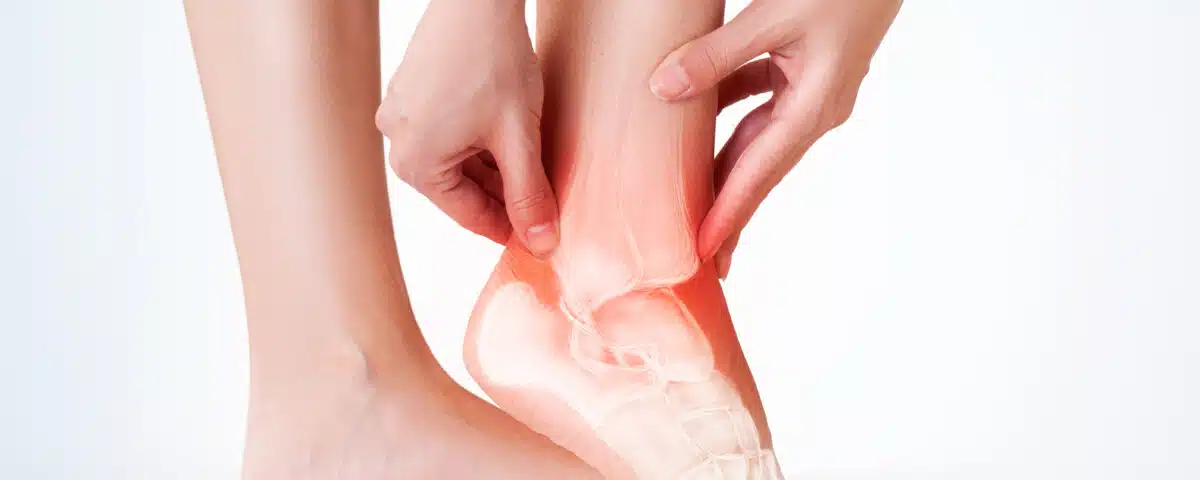
Plantar Fasciitis, heel spurs, Achilles tendinitis, tarsal tunnel syndrome, and nerve entrapment are conditions of the foot that affect millions of people every year. These issues can range from being uncomfortable to severe and occasionally debilitating. Because of this pain, people tend to walk differently, which can then lead to knee, hip, and back problems. Since the foot is no longer stable, this also means the back is no longer stable.
Plantar Fasciitis Actually Begins in Your Lower Back
Plantar fasciitis is an excruciatingly painful condition. It’s an infirmity of the connective tissue that supports the arch of the foot. The pain and inflammation that occurs in the plantar fascia is an indicator of muscle tension that begins in the lower back.
No amount of rest, icing, orthotics or wearing arch supports will cure your plantar fasciitis if you don’t address the bigger form of muscle tension that is causing the problem. Luckily, the scientific world is exploring the connection between plantar fasciitis and pain and dysfunction in the lower back.
A study done in 2017 explored the association between plantar fasciitis and lower back pain. They theorized that the lack of response to plantar heel pain treatment may be related to low back dysfunction and unmanaged low back pain.
The study also discovered a significantly higher rate of lower back pain among people with plantar heel pain. In fact, 74 percent of those with plantar heel pain also had lower back pain. Those with plantar heel pain also had 17 percent higher levels of low back disability. The researchers concluded that treatment to address disability from lower back pain may be a sensible approach to successfully improve plantar heel pain.
What is Plantar Fasciitis?
The plantar fascia is a thick band of connective tissue that runs along the underside of the foot, from the heel bone to the metatarsal bones in the foot. It supports the arch of the foot by carrying tension when the foot bears weight. When too much is needed by the plantar fascia, the tissue becomes inflamed, and very painful.
The Primary Cause of Plantar Fasciitis
Our muscles, ligaments, tendons, and bones create a complex pulley system throughout our body. No part of the body moves autonomously. Tension or movement in one area of the body always affects other parts of the body.
When plantar fasciitis is involved, tight lower back muscles pull the lumbar vertebrae and the top of the pelvis closer together. This typically causes the pelvis to tilt forward. Hip flexors will also tighten and tilt the pelvis forward, both playing a role in plantar fasciitis.
An equal amount of tension across the lower back might result in having plantar fasciitis pain proportionately in both feet. But most individuals have one hip or one side of their lower back that’s tighter than the other.
Imbalanced Tightness
Imbalanced tightness in the lower back muscles often result in suffering plantar fasciitis pain more in one foot than the other. When one hip is higher than the other, or your pelvis is tilting forward, your hamstrings are drawn tighter. The hamstring muscles stem from the bottom of your pelvic bone, run down behind your thighs, to the tops of your fibula and tibia, the bones of your lower leg.
The tightness in our hamstrings draw on the bones of your lower leg, attempting to flex your knees. This effort to flex your knees uses the muscles of the lower leg that flex the knees. The chief muscle in the calf of the leg, flexes the knee and foot. It also runs to the Achilles tendon from two domes attached to the femur, and attaches to the heel bone. When these muscles are tight, they not only flex the knee, but also plantar flex the ankle.
When the ankle is plantar flexed, the connective tissues and muscles on the bottom of the foot are tightened. If this occurred while we were lying down, there probably wouldn’t be any negative effects. But if this pulley system is chronically tight, especially if we spend a lot of time on our feet, pain in the plantar fascia is bound to happen as it bears the weight of our entire body while being pulled tight.
How Does This Pattern of Tightness Occur?
We develop recurrent tightness in our muscles as a result of muscle memory. Throughout our lives, we duplicate movements or postures and we start to build up relentless muscle tension in the muscles involved in those patterns. It happens gradually so we usually don’t notice we’re little by little tightening up until one day, we feel pain.
Unfortunately, most health care professionals don’t understand how full-body patterns of tightness can cause pain or symptoms to be felt in just one area. Therefore, they focus only on the painful area. These spot remedies usually have short term effects because they don’t address the underlying cause of the problem.
Conditions for Developing Plantar Fasciitis
Plantar fasciitis can develop without an obvious cause, there are some factors that increase your risk of developing this condition.
- Age – Plantar fasciitis is common in people between the ages of 40 and 60.
- Certain exercises – Exercises that put a lot of stress on your heel and attached tissues — such as ballet and aerobic dancing, and long-distance running can contribute to the onset of plantar fasciitis.
- Foot mechanics – High arches, flat feet or even an unusual pattern of walking affects the way weight is distributed, and can put added stress on the plantar fascia.
- Obesity – Excess weight puts extra stress on your plantar fascia.
- Occupations that keep you on your feet – Teachers, construction workers, factory workers, waiters, and waitresses, and those who spend their work hours standing or walking on hard surfaces can be at a higher risk of developing plantar fasciitis.
How Can I Deal with My Plantar Fasciitis?
The way to cope with your plantar fasciitis is to address the entire pattern of tension that’s resulting in your plantar fascia becoming strained, inflamed, and painful.
Wear Sensible Shoes
- Avoid deep static stretching; stretching can make muscles tighter
- Ditch your high heels
- Put your legs in the air against a wall. This is great for relieving swollen feet and for increasing blood circulation
- Reduce the time spent on your feet
- Vary your activities and types of exercise
Ice Therapy
- Apply ice to the elevated heel
- Promotes healing
- Reduces inflammation in plantar fasciitis and numbs the area
- Roll your foot over a frozen water bottle
Make An Appointment Today
The Chiropractors at Texas Spine & Sports Therapy Center have been thoroughly trained in treating not only conditions of the back and neck, but of the extremities as well. We will work with you to determine what’s at the foundation of your foot pain with a holistic, non-invasive treatment that will ease your pain.
Our chiropractors understand the body’s interconnected nature, where injury in one area can impact others. By identifying and addressing underlying imbalances affecting the plantar fascia, we aim to provide lasting pain relief.
Following a comprehensive assessment, we customize your treatment plan with various chiropractic services. This may include multiple types of adjustments, soft tissue therapies, and targeted exercises designed to promote healing and optimize your recovery.
If you are suffering from plantar fasciitis contact Texas Spine & Sports Therapy Center online or call our office at (512) 806-0015. We can help you put your best foot forward!