
Could You Benefit from Regenerative Medicine?
June 3, 2020
Stretch Your Spine with Non-surgical Spinal Decompression
June 17, 2020
More and more people get out on their bikes in the summertime. If you’re one of those people and develop knee pain, you could have knee pain from cycling. Here’s why cycling can cause knee pain, and how Texas Spine & Sports Therapy can help get you back on your bike as soon as possible.
What is Knee Pain?
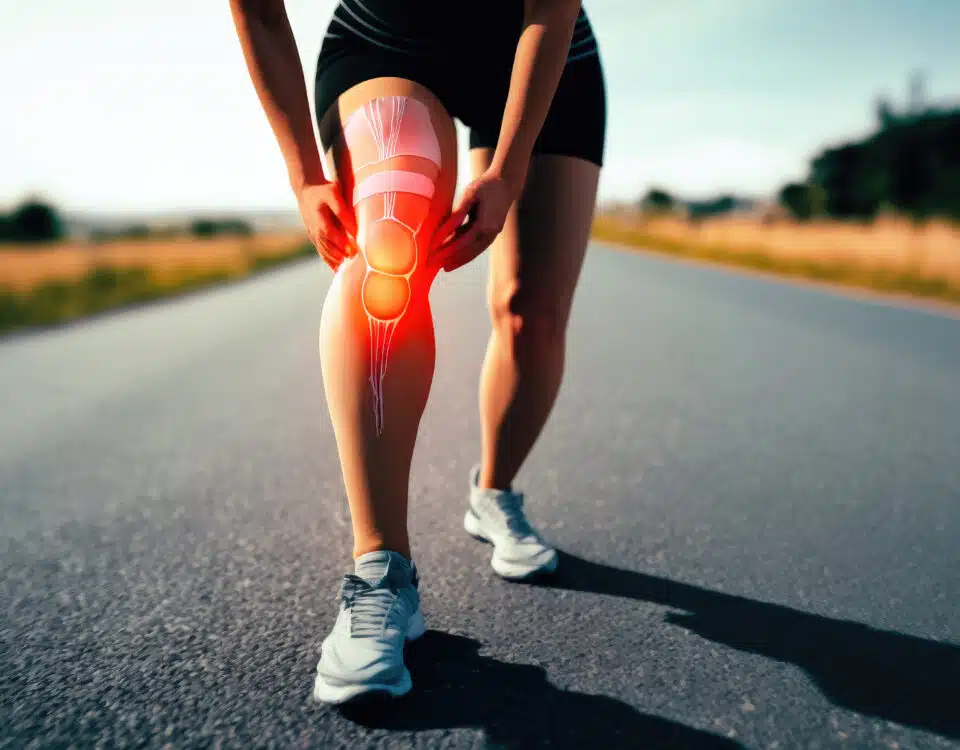
If you have knee pain, you know all too well how it can disrupt your daily routine because of the irritation it can cause. Many athletes believe that their pain is just something that comes along with being active. However, knee pain can be a sign that there’s deeper damage. If you have knee pain and ignore the symptoms, you could risk permanent scarring or nerve pain.
Knee pain is a very common complaint among adults and athletes who have suffered wear and tear as a result of aging or just everyday activities. Hopkins Medicine explains that the most common knee problems include sprained and strained ligaments, cartilage tears, tendonitis, or arthritis.
As the center joint of the leg, however, there could be over a dozen potential conditions or injuries causing your knee pain. As the center joint, the knee takes the majority of the force with each step when you run, walk, or cycle.
Cycling and Knee Pain
Many cyclists will unfortunately suffer from pain or injury at a point during their career. In fact, research has shown that up to 33% of cyclists suffered from knee pain alone at one point. For those who experience aching knees while cycling, it’s most often caused by overuse. Most pain happens when riders are on the bike for longer than they’re used to, or when they train harder than normal. When riders do this, they place strain on the knee, which can cause inflammation and pain.
Cyclists can also hurt their knees by riding improperly. Riders who use improper equipment or ride in the wrong position can be causing damage to their knees and other parts of their bodies without realizing it before it’s too late. Bicycling.com lists the common pains riders could feel in their knees and what that could mean about their riding positions:
- Pain in front of the knee – this is when your knee hurts right on the kneecap, typically caused by too much force coming from the quads. If this is where you feel pain, your saddle could be too low. When on the bike, your knee should bend to a 20- to 25-degree angle. Another cause could be riding too far forward. Your seat should also be positioned where the knee is directly over the ball of the foot.
- Pain in the back of the knee – this is less common, but happens due to overextending the knee. This means your saddle is too high or too far back. If you feel this pain, try lowering the seat or moving it forward towards the handlebars. Remember, you’re looking for that angle nearing 20 degrees.
- Pain on the inner knees: when you feel pain on the inside of your knees, it’s often due to improper feet placement. Ideally, they say, your spacing should be such that the loads from your knees to the pedals are traveling vertically without the knee moving inward or outward. When the feet aren’t properly positioned, it creates stress on the inner ligaments.
- Pain on the outer knees: this most commonly happens in those that suffer from iliotibial (IT) band syndrome. Again, this can be due to improper foot placement.
Other Causes
Pain in the knee doesn’t just come along with cycling, it can be brought on by other things too. Common causes of knee problems include:
- Bursitis of the knee
- Dislocation and injury
- Tendinitis
- Cysts on the cartilage or muscles
- Sprains and strains of the tendons around the bone
- Gout and pseudogout
- Hyper-extension during exercise or activity
- Wear and tear due to aging
- Infections of the knee
- Tears in the meniscus
- Iliotibial band syndrome
Symptoms
Knee pain by itself is the most common symptom, however, other effects can come along with it. Other symptoms can include:
- Tenderness on the surface of the skin or when the knee is pressed
- Pain that increases with exercise or activity
- Tingling and numbness around the knee or extending down to the knee
- Instability or buckling when weight is placed on the joint
- Swelling
- Popping, snapping, or creaking noises
Treatment
You don’t have to suffer from knee pain. Our medical team can help provide simple treatments that could relieve you of your pain. Some of the treatment options we offer include: scheduled rest, massage, guided movements and stretches, joint injections, and supplements.
Make an Appointment with Texas Spine and Sports Therapy
If you have knee pain that just won’t go away, you don’t have to resort to surgery right away. Make an appointment to come talk to our team about one of our non-invasive and comfortable treatments. Call (512)-806-0015 to make an appointment now so you can get back on your bike as soon as possible.