

Thanksgiving Back Pain: Tips to Avoid It and What to Do If You Get It
November 23, 2022
How to Stop Back Spasms in Their Tracks
December 9, 2022
Sciatica is a condition that can cause back pain and discomfort. It is caused when the sciatic nerve becomes compressed or irritated. This can lead to problems with mobility and spinal health. In this blog post, we will discuss the causes and symptoms of sciatica, as well as ways to treat the condition. If you are suffering from sciatica, it is important to seek medical help from Texas Spine and Sports Therapy Center. There are many treatment options available that can help you get relief from your symptoms!
What is Sciatica?
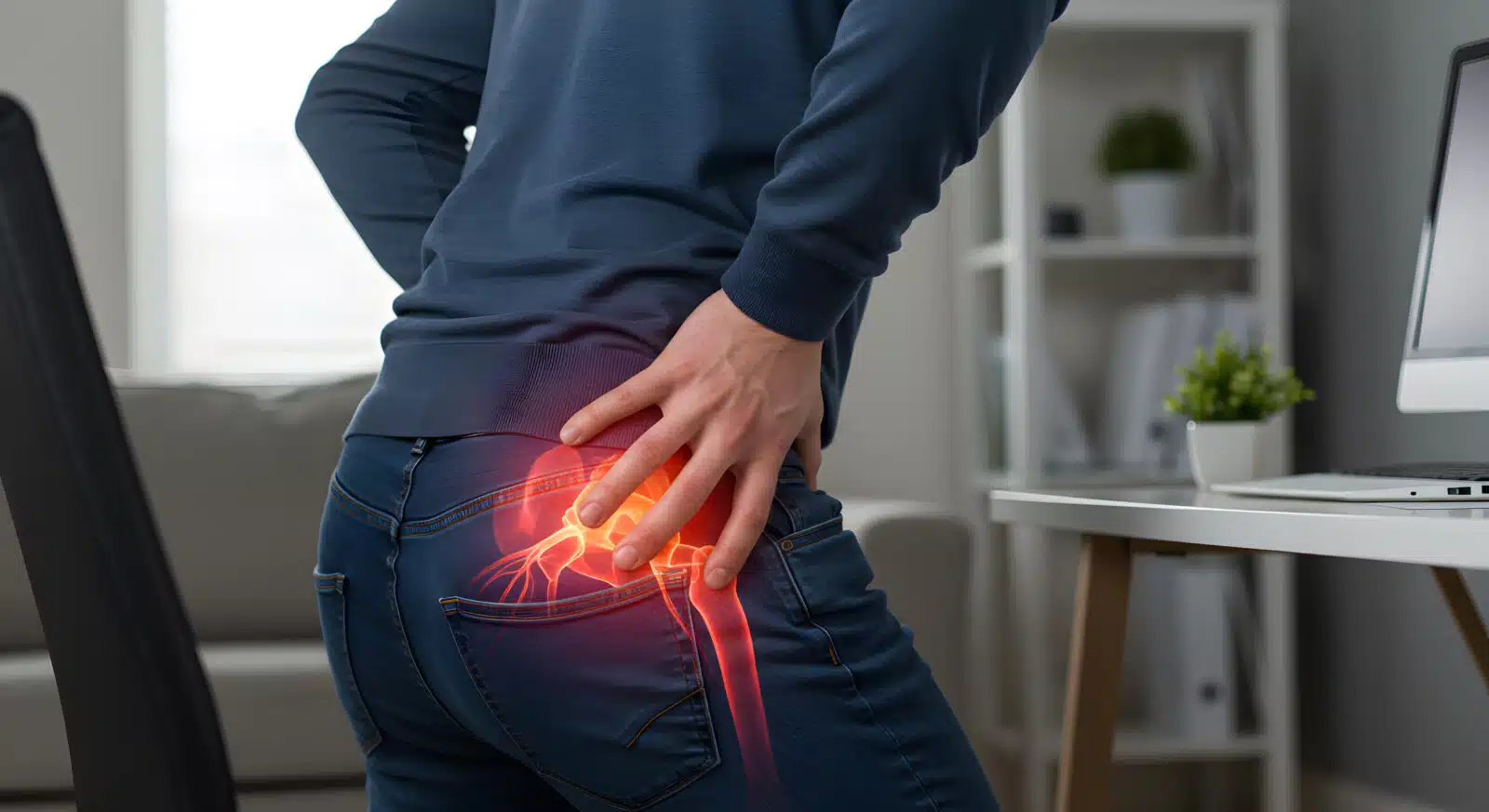
Sciatica, also called lumbar radiculopathy, is a pain that originates along your sciatic nerve. This nerve extends from the back of your pelvis down the back of your thigh. Your sciatic nerve is the main nerve in your leg. It is also the largest nerve in your entire body.
Who’s at Risk?
People who are more likely to experience sciatica include those who are over the age of 30, have a history of back pain or injury, and lead sedentary lifestyles. Other risk factors include obesity, poor posture, and arthritis. Pregnant women may also be at an increased risk for experiencing sciatic nerve compression due to their changing body shape and increased weight.
What Causes Sciatica?
Sciatica is often due to a by a herniated disc, bone spur, tumor, or narrowing of the spinal canal (spinal stenosis). When any of these conditions cause pressure on the sciatic nerve, it can lead to symptoms such as pain, tingling, and numbness in the lower back, buttocks, and legs. Other causes of sciatica include muscle spasms or tight muscles around the spine, piriformis syndrome (irritation of the sciatic nerve due to a tightened muscle), pregnancy complications, and certain infections.
Symptoms
Usually, sciatica affects only one leg at a time and the symptoms radiate from the lower back or buttock to the thigh and down the leg. Sciatica may cause pain in the front, back, and/or sides of the thigh and leg. A few common symptoms seen in sciatica are:
- Pain. Sciatica pain may be constant or intermittent. The pain is usually described as a burning sensation or a sharp, shooting pain. The pain is usually more severe in the leg compared to the back. Leg pain commonly occurs more in the calf region below the knee compared to other parts of the leg.
- Altered sensation. Numbness, tingling, and/or a pins-and-needles sensation may be felt at the back of the leg.
- Weakness. Weakness may be felt in the leg and foot. A feeling of heaviness in the affected leg may make it difficult to lift the foot off the floor.
- Change in posture may aggravate or relieve pain. Certain postures may affect sciatica pain:
- Sciatica pain may feel worse while sitting, trying to stand up, standing for a long time, bending the spine forward, twisting the spine, and/or while coughing.
- Pain may increase or remain constant while lying down, causing disturbed sleepLying on the back with the knees slightly elevated and propped up with a pillow, or lying on the side with a pillow between the legs, may help relieve the pain in such cases.
- The pain may be relieved while walking, applying a heat pack to the rear pelvic area, or doing pelvic exercises.
How Sciatica Can Affect Your Spinal Health
Sciatica can cause significant pain and discomfort that can lead to a decrease in mobility and range of motion. In addition, it can also cause muscle weakness due to the pressure placed on the sciatic nerve. This weakened state can then put additional stress on your spine, as well as other parts of your body. It is important to seek medical help from Texas Spine and Sports Therapy Center if you are experiencing any of these symptoms.
Treatment Options for Sciatica
At Texas Spine and Sports Therapy Center, our team of experienced therapists can provide you with personalized treatment plans that can help relieve your sciatica pain. Common treatments include physical therapy, stretching exercises, manual manipulation, and massage therapy. In some cases, injections may be recommended to reduce inflammation and swelling around the sciatic nerve. Surgery may also be an option if other treatments fail to provide relief.
Make an Appointment with Texas Spine and Sports Therapy Center
If you are suffering from sciatica pain, contact Texas Spine and Sports Therapy Center today for more information on how we can help. We are here to help you find the relief you need and get your spinal health back on track!