
What is Sinusitis?
August 19, 2021
The Painful Side Effects of Poor Posture
August 31, 2021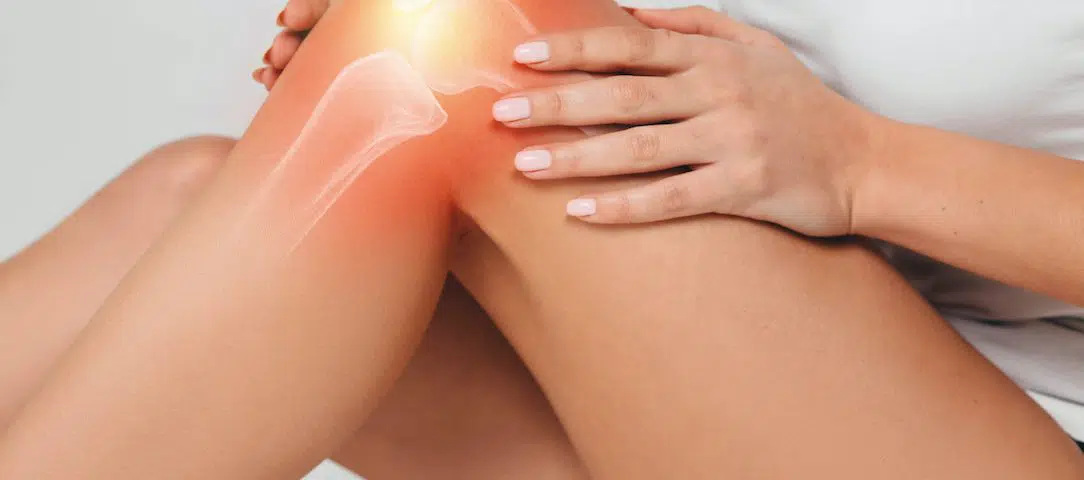
If you are new to an exercise routine and begin to experience sore or burning joints, these symptoms could signal a progressive illness, like that or bursitis. Bursitis in the inflammation of one or more bursa. These are the small pads that are fluid-filled and sit between our muscles, bones, ligaments, and tendons. Without these cushions, moving our joints would be incredibly painful. This is why this condition occurs and what it could mean for the health of your joints.
What is Bursitis?
The bursae are small fluid-filled bags that sit between muscles, bones, ligaments, and tendons. Without these cushions, moving any joint would be incredibly painful as all of these bands would rub together. Bursitis is when there is inflammation of one or more bursa. Inflammation of the bursa means that moving can be excruciating.
Why Bursitis Occurs
While this condition can occur with any brush in the body, Johns Hopkins Medicine lists the common types of bursitis to be:
- Retromalleolar tendon bursitis, also known as Albert disease. It’s the result of things like injury, disease, or shoes with rigid back support. These put extra strain on the lower part of the Achilles tendon. This attaches the calf muscle to the back of the heel. This can lead to inflammation of the bursa located where the tendon attaches to the heel.
- Posterior Achilles tendon bursitis. This type, also called Haglund deformity, is in the bursa located between the skin of the heel and the Achilles tendon. This attaches the calf muscles to the heel. It is due to a type of walking that presses the soft heel tissue into the hard back support of a shoe.
- Hip bursitis. Also called trochanteric bursitis, it is often the result of injury, overuse, spinal abnormalities, arthritis, or surgery. This type of bursitis is more common in women and middle-aged and older people.
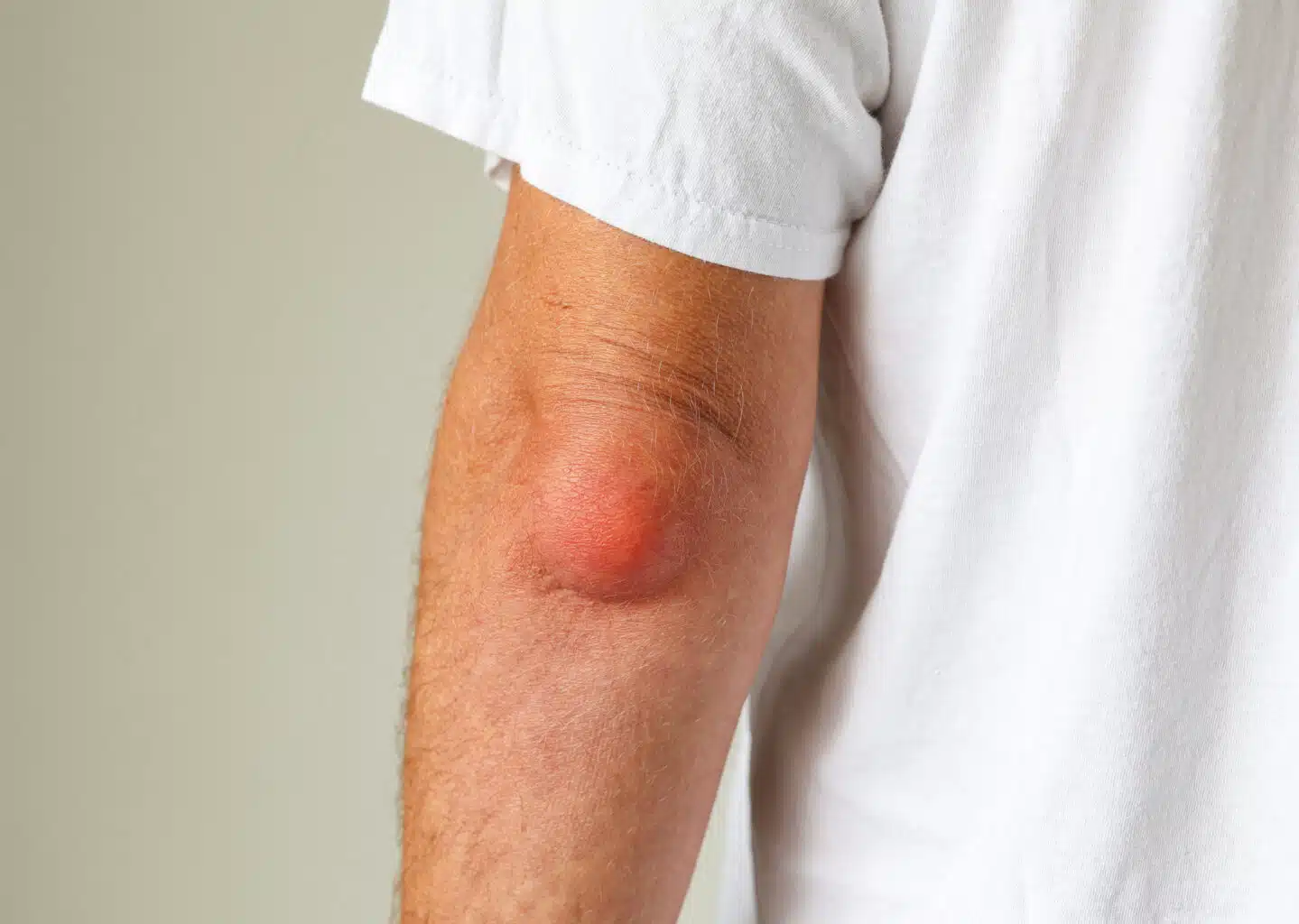
- Elbow bursitis. This type is due to inflammation between the skin and bones of the elbow (the olecranon bursa). It can be caused by injury or constant pressure on the elbow (for example, when leaning on a hard surface).
- Knee bursitis. Bursitis in the knee is also called goosefoot bursitis or Pes Anserine bursitis. The Pes Anserine bursa is located between the shin bone and the three tendons of the hamstring muscles, on the inside of the knee. This type of bursitis may be caused by lack of stretching before exercise, tight hamstring muscles, being overweight, arthritis, or out-turning of the knee or lower leg.
- Kneecap bursitis. Also called prepatellar bursitis, this type is common in people who are on their knees a lot, such as carpet layers and plumbers.
Causes
The bursae found in the elbows, knees, and ankles are particularly sensitive to overuse. If you begin a new running routine or start a new job where you’re overusing these bursae, you may begin to feel pain from joints that are at the base of impact and pressure. Bursitis can be the result of:
- Repetitive motions like swinging or punching
- Resting your weight on your elbows for too long
- Sitting on hard surfaces for hours at a time each day
- Auto accidents with traumatic injuries
- Overuse and strain of the surrounding muscles, ligaments, and tendons
- Rheumatoid arthritis and gout
Symptoms
If you have this condition, Mayo Clinic lists the signs to include:
- Joints that feel achy or stiff
- Pain when you move the joint or press on it
- Swollen or red joints
- Disabling joint pain
- Sudden inability to move a joint
- Excessive swelling, redness, bruising, or a rash in the affected area
- Sharp or shooting pain, especially when exercising or exerting yourself
- A fever
Treatments
For patients who suffer from mild cases, rest often is the best treatment. However, if after a few days of rest you’re still experiencing pain, our team at Texas Spine and Sports Therapy Center might recommend treatments like:
- Stretching to release tight tendons and ligaments pressing against bursae
- Recommendations for elevation and icing routines to reduce pain
- Sarapin injections directly into the sore joint
- Antibiotics if there is an infection
- Exercise routines to help you get fit without irritating your joints further
- Massage
Make an Appointment with Texas Spine and Sports Therapy Center
If you are experiencing sore and achy joints, don’t wait to make an appointment with Dr. Shaner and our team at Texas Spine and Sports Therapy Center. We will provide you with a specialized treatment plan for bursitis right here in our Austin, Texas office. To find out more, call us today: (512)-806-0015.